
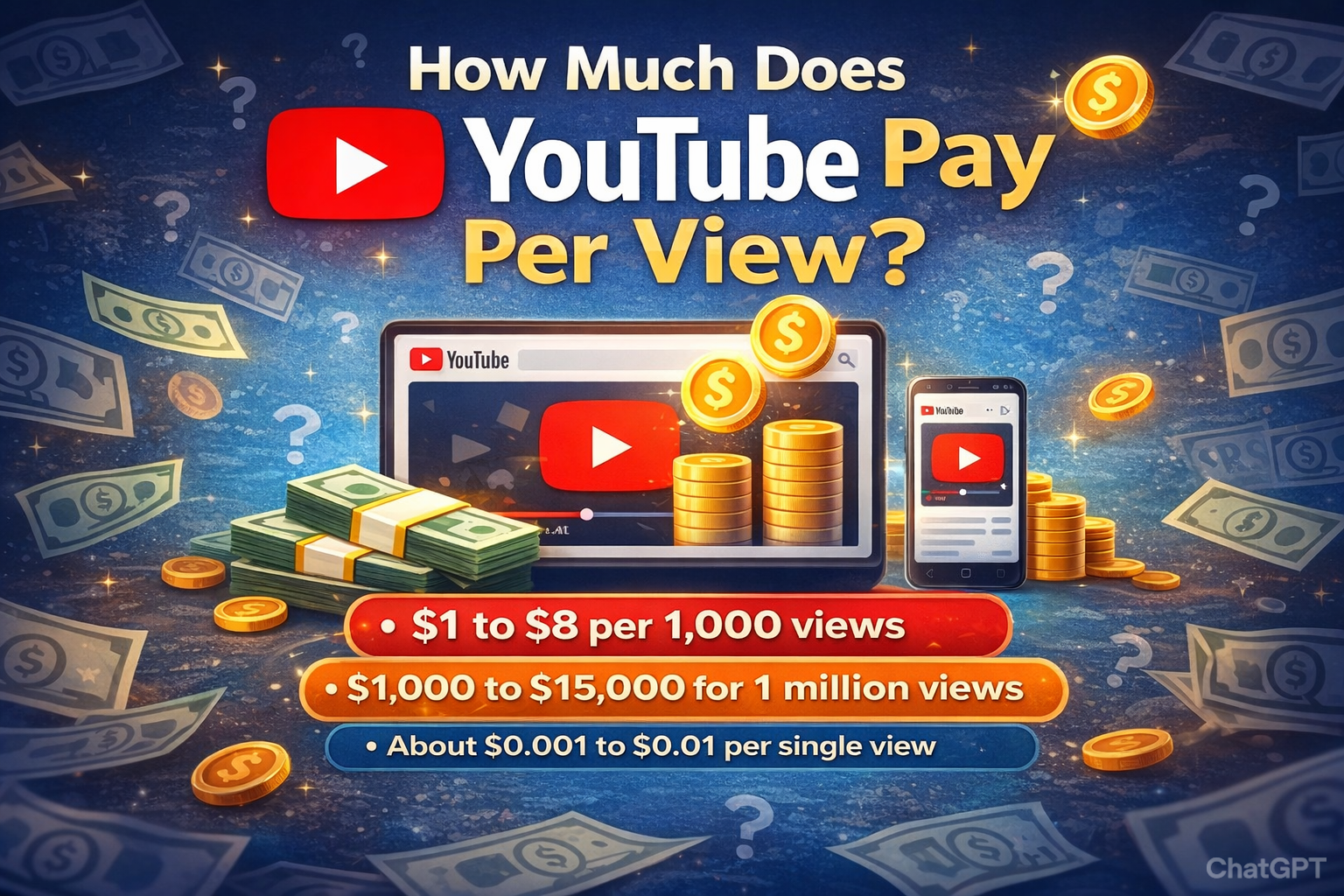
YouTube Income Explained: How Much Money You Make Per View in 2026
Today, YouTube is not just a video-sharing site—it has become a powerful income platform for creators around the world. From students to full-time content creators, millions of people upload videos every day, hoping to earn money online in USD.
One of the most common questions beginners search on Google is
-
How much does YouTube pay per view
-
How much does YouTube pay per 1000 views
-
How much does YouTube pay per million views
These questions are very popular because many people believe YouTube pays a fixed amount for each view. In reality, the system is more complex and depends on ads, audience country, niche, and engagement.
In this article, you will learn the real truth about YouTube earnings, including how creators actually get paid, realistic income examples in USD, and what factors increase or decrease revenue. By the end, you will clearly understand how much money a video can make and what to expect as a creator.
Does YouTube Really Pay Per View?
Myth vs Reality
Many beginners think YouTube pays a fixed amount for every single view. This is the biggest myth in YouTube monetization.
The reality is different.
YouTube does not pay for views alone. It pays creators when ads are shown on their videos and viewers interact with those ads. So, income depends more on advertising than on raw view numbers.
For example:
-
A video with 10,000 views but very few ads may earn only $5–$15 USD
-
Another video with 10,000 views and strong advertiser demand may earn $40–$80 USD
This shows that views alone do not decide earnings.
Difference Between Total Views and Monetized Views
Not every view on a video makes money.
Total Views
This is the number you see on the video. It includes every person who clicked and watched, even if:
-
They skipped ads
-
They used an ad blocker
-
No ad was available for them
Monetized Views
These are the views where ads actually appeared. Only these views generate revenue.
Example:
If your video gets 100,000 views, usually only 30%–60% of them may be monetized.
So, you may earn money from about 30,000–60,000 views, not the full 100,000.
Role of Advertisers and Ad Impressions
Advertisers are the real source of YouTube’s income.
Companies pay YouTube to show ads on videos. When those ads appear, they create ad impressions. Revenue is generated when:
-
An ad is shown (CPM-based earning)
-
A viewer watches at least 30 seconds of the ad
-
A viewer clicks the ad
Read More: How to Start Freelancing in 2026: Beginner’s Step-by-Step Guide
Different advertisers pay different rates.
For example:
-
Finance or business ads may pay $10–$25 CPM
-
Entertainment ads may pay only $2–$5 CPM
This is why two channels with the same views can earn very different amounts in USD.
How YouTube Monetization Actually Works
To understand how much money a creator can earn, you first need to know how the monetization system of YouTube really works. YouTube income mainly comes from ads, but there is a process behind it.
YouTube Partner Program (YPP)
Before earning money, a creator must join the YouTube Partner Program.
To qualify, a channel usually needs:
-
At least 1,000 subscribers
-
4,000 public watch hours in the last 12 months
OR 10 million Shorts views (last 90 days) -
No copyright or policy violations
-
A linked AdSense account
Once approved, ads can appear on videos, and the creator can start earning in USD.
Earnings Through Ads
Ads are the main income source on YouTube. There are two important terms:
CPM (Cost Per 1,000 Ad Impressions)
This is the amount advertisers pay for 1,000 ad views.
Example: If CPM is $10, advertisers pay $10 per 1,000 ad impressions.
RPM (Revenue Per 1,000 Views)
This is what creators actually receive after YouTube’s share.
YouTube keeps about 45%, and creators get about 55%.
So if a video has a $10 CPM, the creator might receive around $4–$6 RPM. RPM is the real number that shows how much a channel earns.
Read More: Best Earning Money App for Beginners (Real, Free & Legit Guide)
Payments Through Google AdSense
YouTube does not pay creators directly. Payments are handled through Google AdSense.
Here’s how it works:
-
Earnings are added to your AdSense account
-
The minimum payout threshold is $100 USD
-
Payments are usually sent between the 21st and 26th of each month
For example:
If your channel earns $135 in January, you will likely receive the payment in late February. This is the basic system behind YouTube income.
How Much Does YouTube Pay Per 1,000 Views?
This is one of the most searched questions by new creators. When people ask how much YouTube pays per 1000 views, they usually want a simple number. But the real answer depends on several factors.
Still, we can estimate a realistic USD range.
Average YouTube Earnings Per 1,000 Views (RPM Range)
On average, creators earn between:
-
$1 to $3 USD per 1,000 views (low range)
-
$3 to $8 USD per 1,000 views (typical range)
-
$8 to $20+ USD per 1,000 views (high-paying niches)
This number is called RPM (Revenue Per Mille), and it shows what the creator actually receives after YouTube takes its share.
Read More: How to Earn Money Online Without Investment (5 Best way to Beginner-Friendly Guide)
Earnings Based on Niche (Truthful Examples)
Different topics attract different advertisers. That means earnings change a lot depending on your content.
Entertainment / Vlogs
-
RPM: about $1 – $3
-
10,000 views ≈ $10 – $30
Education / Tech
-
RPM: about $3 – $8
-
10,000 views ≈ $30 – $80
Finance / Online Business
-
RPM: about $8 – $20+
-
10,000 views ≈ $80 – $200+
This is why business and finance channels often earn much more than entertainment channels, even with the same number of views.
Simple Income Calculation Example: Let’s say a video gets 50,000 views.
-
Low RPM ($2) → about $100 USD
-
Medium RPM ($5) → about $250 USD
-
High RPM ($12) → about $600 USD
So the same views can produce very different income depending on the audience, niche, and advertiser demand.
How Much Does YouTube Pay Per Million Views?
Another very popular search is how much does YouTube pay per million views. Reaching one million views sounds huge, and it can bring good income — but the total amount still depends on RPM, niche, and audience location. Let’s look at realistic USD estimates.
Estimated Earnings for 1 Million Views
Based on average creator RPM, here is a truthful range:
-
Low RPM ($1–$2) → about $1,000 – $2,000 USD
-
Medium RPM ($3–$6) → about $3,000 – $6,000 USD
-
High RPM ($8–$15+) → about $8,000 – $15,000+ USD
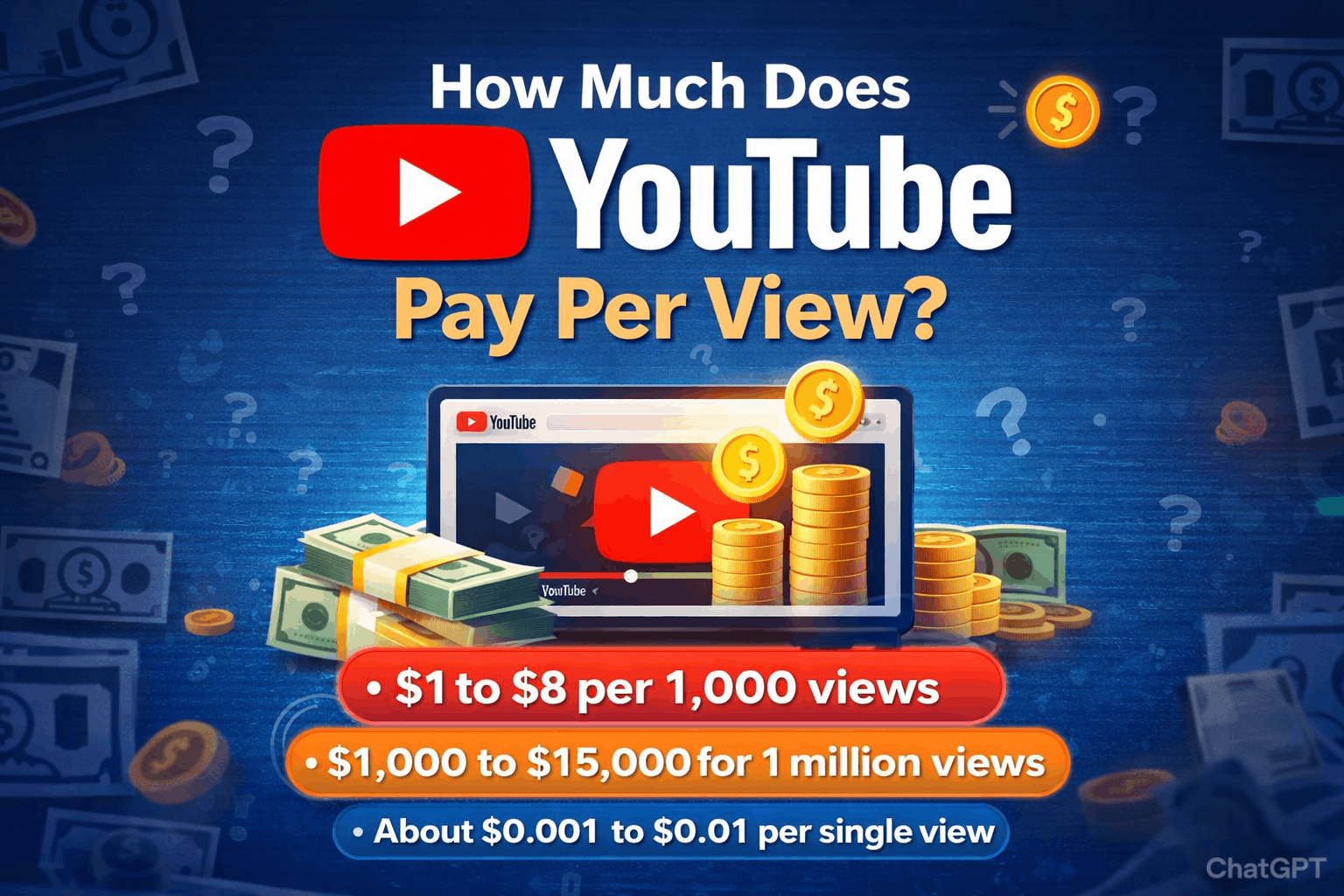
So, one million views can earn anywhere from $1,000 to over $15,000, depending on content and audience.
Low vs High CPM Scenario (Realistic Example)
Example 1: Entertainment Channel
-
Audience mostly from low-CPM countries
-
RPM ≈ $2
-
1,000,000 views ≈ $2,000 USD
Example 2: Finance Channel
-
Audience from the USA, UK, and Canada
-
RPM ≈ $10
-
1,000,000 views ≈ $10,000 USD
Both videos have the same views, but the income difference is very large.
Important Reality Check
Not all million-view videos earn from ads only. Many creators also earn from:
-
Sponsorship deals
-
Affiliate marketing
-
Product sales
-
Course promotions
In some cases, a sponsored mention inside a million-view video can earn more than the ad revenue itself.
Estimated YouTube Pay Per Single View
Many beginners want to know the exact earnings per view. But in reality, YouTube does not pay a fixed amount for each view. Still, we can estimate the average value by converting RPM into per-view income.
Average Earnings Per Single View (USD Estimate)
Based on common RPM ranges:
-
Low RPM ($1 per 1,000 views) → about $0.001 per view
-
Medium RPM ($5 per 1,000 views) → about $0.005 per view
-
High RPM ($12 per 1,000 views) → about $0.01+ per view
So, most creators earn somewhere between:
$0.001 to $0.01 per view
That means a single view is worth less than one cent, but large numbers of views add up quickly.
Simple Breakdown Example
Let’s assume your video RPM is $4.
-
1 view ≈ $0.004
-
1,000 views ≈ $4
-
100,000 views ≈ $400
-
1,000,000 views ≈ $4,000
This shows why creators focus on scaling views instead of worrying about one view.
Why Per-View Earnings Change So Much
Per-view income varies because:
-
Not every viewer sees an ad
-
Ad prices change daily
-
Audience country affects advertiser spending
-
Watch time determines how many ads can be shown
So, two videos with the same views may still earn different amounts.