
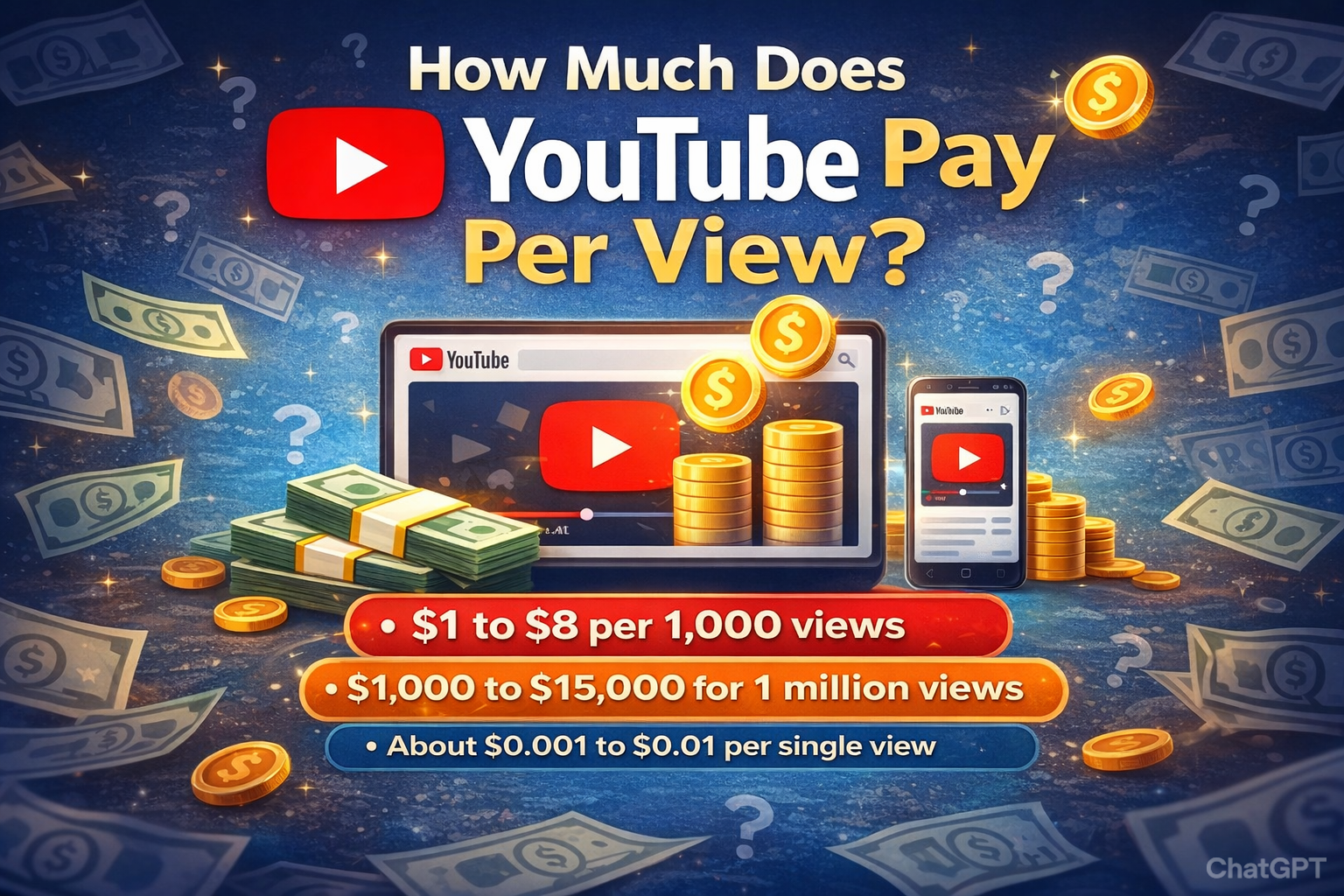
How Much Does YouTube Pay Per View, 1,000 & 1 Million Views in 2026 (Real USD Earnings)

YouTube Income Explained: How Much Money You Make Per View in 2026
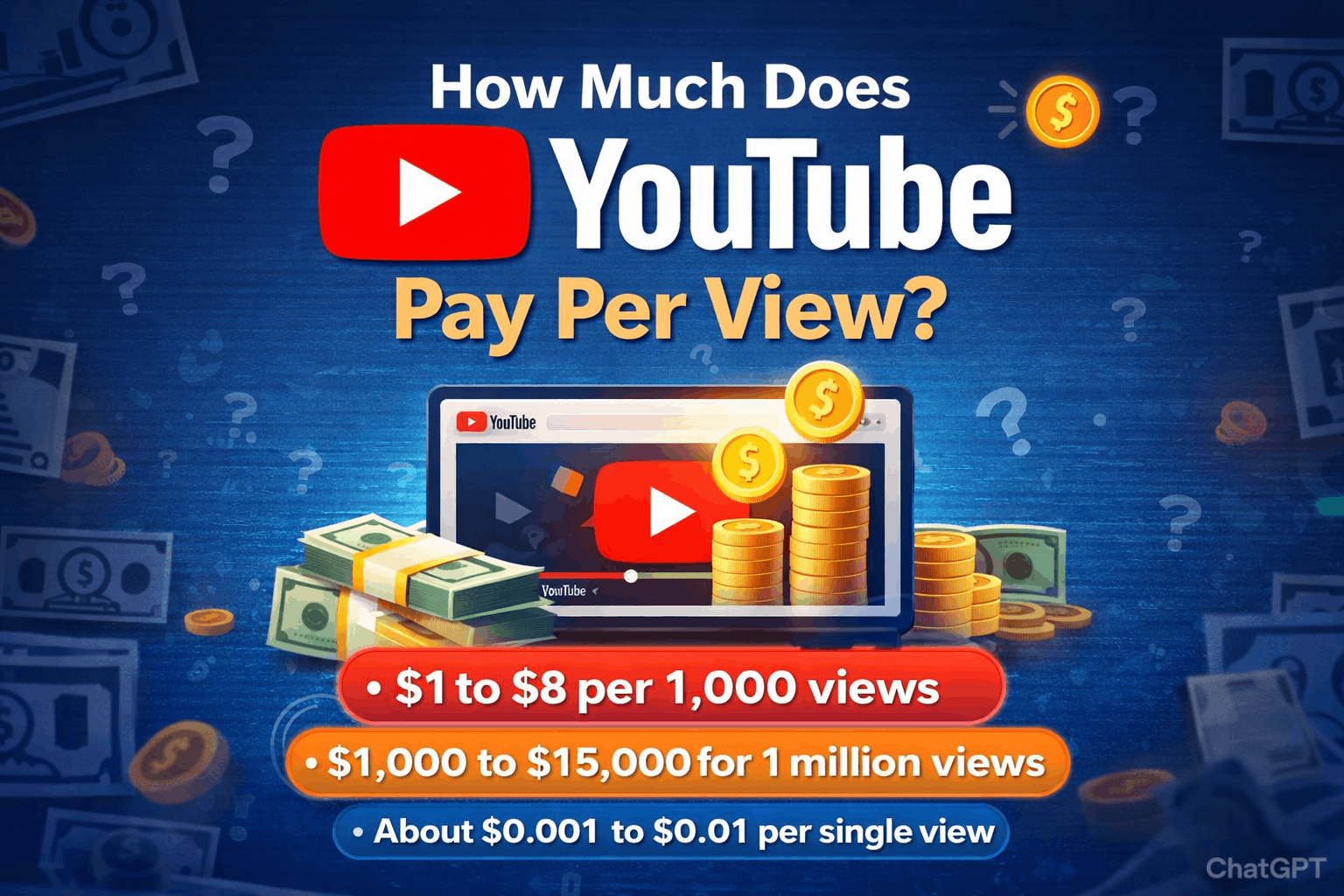
How Much Does YouTube Pay Per View, 1,000 & 1 Million Views in 2026 (Real USD Earnings)

Today, YouTube is not just a video-sharing site—it has become a powerful income platform for creators around the world. From students to full-time content creators, millions of people upload videos every day, hoping to earn money online in USD.

One of the most common questions beginners search on Google is

  • How much does YouTube pay per view

  • How much does YouTube pay per 1000 views

  • How much does YouTube pay per million views

These questions are very popular because many people believe YouTube pays a fixed amount for each view. In reality, the system is more complex and depends on ads, audience country, niche, and engagement.

In this article, you will learn the real truth about YouTube earnings, including how creators actually get paid, realistic income examples in USD, and what factors increase or decrease revenue. By the end, you will clearly understand how much money a video can make and what to expect as a creator.

Does YouTube Really Pay Per View?

Myth vs Reality

Many beginners think YouTube pays a fixed amount for every single view. This is the biggest myth in YouTube monetization.

The reality is different.
YouTube does not pay for views alone. It pays creators when ads are shown on their videos and viewers interact with those ads. So, income depends more on advertising than on raw view numbers.

For example:

  • A video with 10,000 views but very few ads may earn only $5–$15 USD

  • Another video with 10,000 views and strong advertiser demand may earn $40–$80 USD

This shows that views alone do not decide earnings.

Difference Between Total Views and Monetized Views

Not every view on a video makes money.

Total Views
This is the number you see on the video. It includes every person who clicked and watched, even if:

  • They skipped ads

  • They used an ad blocker

  • No ad was available for them

Monetized Views
These are the views where ads actually appeared. Only these views generate revenue.

Example:
If your video gets 100,000 views, usually only 30%–60% of them may be monetized.
So, you may earn money from about 30,000–60,000 views, not the full 100,000.

Role of Advertisers and Ad Impressions

Advertisers are the real source of YouTube’s income.

Companies pay YouTube to show ads on videos. When those ads appear, they create ad impressions. Revenue is generated when:

  • An ad is shown (CPM-based earning)

  • A viewer watches at least 30 seconds of the ad

  • A viewer clicks the ad

Read More: How to Start Freelancing in 2026: Beginner’s Step-by-Step Guide

Different advertisers pay different rates.
For example:

  • Finance or business ads may pay $10–$25 CPM

  • Entertainment ads may pay only $2–$5 CPM

This is why two channels with the same views can earn very different amounts in USD.

How YouTube Monetization Actually Works

To understand how much money a creator can earn, you first need to know how the monetization system of YouTube really works. YouTube income mainly comes from ads, but there is a process behind it.

YouTube Partner Program (YPP)

Before earning money, a creator must join the YouTube Partner Program.

To qualify, a channel usually needs:

  • At least 1,000 subscribers

  • 4,000 public watch hours in the last 12 months
    OR 10 million Shorts views (last 90 days)

  • No copyright or policy violations

  • A linked AdSense account

Once approved, ads can appear on videos, and the creator can start earning in USD.

Earnings Through Ads

Ads are the main income source on YouTube. There are two important terms:

CPM (Cost Per 1,000 Ad Impressions)
This is the amount advertisers pay for 1,000 ad views.
Example: If CPM is $10, advertisers pay $10 per 1,000 ad impressions.

RPM (Revenue Per 1,000 Views)
This is what creators actually receive after YouTube’s share.
YouTube keeps about 45%, and creators get about 55%.

So if a video has a $10 CPM, the creator might receive around $4–$6 RPM. RPM is the real number that shows how much a channel earns.

Read More: Best Earning Money App for Beginners (Real, Free & Legit Guide)

Payments Through Google AdSense

YouTube does not pay creators directly. Payments are handled through Google AdSense.

Here’s how it works:

  • Earnings are added to your AdSense account

  • The minimum payout threshold is $100 USD

  • Payments are usually sent between the 21st and 26th of each month

For example:
If your channel earns $135 in January, you will likely receive the payment in late February. This is the basic system behind YouTube income.

How Much Does YouTube Pay Per 1,000 Views?

This is one of the most searched questions by new creators. When people ask how much YouTube pays per 1000 views, they usually want a simple number. But the real answer depends on several factors.

Still, we can estimate a realistic USD range.

Average YouTube Earnings Per 1,000 Views (RPM Range)

On average, creators earn between:

  • $1 to $3 USD per 1,000 views (low range)

  • $3 to $8 USD per 1,000 views (typical range)

  • $8 to $20+ USD per 1,000 views (high-paying niches)

This number is called RPM (Revenue Per Mille), and it shows what the creator actually receives after YouTube takes its share.

Read More: How to Earn Money Online Without Investment (5 Best way to Beginner-Friendly Guide)

Earnings Based on Niche (Truthful Examples)

Different topics attract different advertisers. That means earnings change a lot depending on your content.

Entertainment / Vlogs

  • RPM: about $1 – $3

  • 10,000 views ≈ $10 – $30

Education / Tech

  • RPM: about $3 – $8

  • 10,000 views ≈ $30 – $80

Finance / Online Business

  • RPM: about $8 – $20+

  • 10,000 views ≈ $80 – $200+

This is why business and finance channels often earn much more than entertainment channels, even with the same number of views.

Simple Income Calculation Example: Let’s say a video gets 50,000 views.

  • Low RPM ($2) → about $100 USD

  • Medium RPM ($5) → about $250 USD

  • High RPM ($12) → about $600 USD

So the same views can produce very different income depending on the audience, niche, and advertiser demand.

How Much Does YouTube Pay Per Million Views?

Another very popular search is how much does YouTube pay per million views. Reaching one million views sounds huge, and it can bring good income — but the total amount still depends on RPM, niche, and audience location. Let’s look at realistic USD estimates.

Estimated Earnings for 1 Million Views

Based on average creator RPM, here is a truthful range:

  • Low RPM ($1–$2) → about $1,000 – $2,000 USD

  • Medium RPM ($3–$6) → about $3,000 – $6,000 USD

  • High RPM ($8–$15+) → about $8,000 – $15,000+ USD

So, one million views can earn anywhere from $1,000 to over $15,000, depending on content and audience.

Low vs High CPM Scenario (Realistic Example)

Example 1: Entertainment Channel

  • Audience mostly from low-CPM countries

  • RPM ≈ $2

  • 1,000,000 views ≈ $2,000 USD

Example 2: Finance Channel

  • Audience from the USA, UK, and Canada

  • RPM ≈ $10

  • 1,000,000 views ≈ $10,000 USD

Both videos have the same views, but the income difference is very large.

Important Reality Check

Not all million-view videos earn from ads only. Many creators also earn from:

  • Sponsorship deals

  • Affiliate marketing

  • Product sales

  • Course promotions

In some cases, a sponsored mention inside a million-view video can earn more than the ad revenue itself.

Estimated YouTube Pay Per Single View

Many beginners want to know the exact earnings per view. But in reality, YouTube does not pay a fixed amount for each view. Still, we can estimate the average value by converting RPM into per-view income.

Average Earnings Per Single View (USD Estimate)

Based on common RPM ranges:

  • Low RPM ($1 per 1,000 views) → about $0.001 per view

  • Medium RPM ($5 per 1,000 views) → about $0.005 per view

  • High RPM ($12 per 1,000 views) → about $0.01+ per view

So, most creators earn somewhere between:

$0.001 to $0.01 per view

That means a single view is worth less than one cent, but large numbers of views add up quickly.

Simple Breakdown Example

Let’s assume your video RPM is $4.

  • 1 view ≈ $0.004

  • 1,000 views ≈ $4

  • 100,000 views ≈ $400

  • 1,000,000 views ≈ $4,000

This shows why creators focus on scaling views instead of worrying about one view.

Why Per-View Earnings Change So Much

Per-view income varies because:

  • Not every viewer sees an ad

  • Ad prices change daily

  • Audience country affects advertiser spending

  • Watch time determines how many ads can be shown

So, two videos with the same views may still earn different amounts.

Estimated YouTube Pay Per Single View

Many beginners want to know the exact earnings per view. But in reality, YouTube does not pay a fixed amount for each view. Still, we can estimate the average value by converting RPM into per-view income.

Average Earnings Per Single View (USD Estimate)

Based on common RPM ranges:

  • Low RPM ($1 per 1,000 views) → about $0.001 per view

  • Medium RPM ($5 per 1,000 views) → about $0.005 per view

  • High RPM ($12 per 1,000 views) → about $0.01+ per view

So, most creators earn somewhere between $0.001 to $0.01 per view. That means a single view is worth less than one cent, but large numbers of views add up quickly.

Simple Breakdown Example

Let’s assume your video RPM is $4.

  • 1 view ≈ $0.004

  • 1,000 views ≈ $4

  • 100,000 views ≈ $400

  • 1,000,000 views ≈ $4,000

This shows why creators focus on scaling views instead of worrying about one view.

Why Per-View Earnings Change So Much

Per-view income varies because:

  • Not every viewer sees an ad

  • Ad prices change daily

  • Audience country affects advertiser spending

  • Watch time determines how many ads can be shown

So, two videos with the same views may still earn different amounts.

7. Key Factors That Affect YouTube Earnings

Even if two channels get the same number of views, their income on YouTube can be very different. That’s because YouTube revenue depends on several important factors, not just view count.

Here are the biggest ones:

1. Audience Country (Very Important)

Advertisers pay more to reach viewers in high-income countries.

High-paying audience locations

  • United States

  • United Kingdom

  • Canada

  • Australia

  • Germany

Channels with viewers from these countries often earn 2–5 times more USD than channels whose audience is mostly from low-CPM regions. ‍Such as:  a video with 100,000 views from the USA may earn $400, while the same views from lower-CPM regions might earn $80–$120.

2. Niche or Topic of the Channel

Some topics attract expensive ads.

High-CPM niches

  • Finance & investing

  • Online business

  • Technology & software

  • Education & career advice

Low-CPM niches

  • Pranks & entertainment

  • Memes & short viral clips

  • Basic vlogs

This is why a finance channel with fewer views can earn more than an entertainment channel with millions of views.

3. Watch Time and Audience Retention

The longer people watch your videos, the more ads YouTube can show.

  • Short videos often show only one ad

  • Longer videos (8+ minutes) can include multiple ads

  • Higher retention = more monetized views

Example:
Two videos get 50,000 views. The one with higher watch time may earn double the revenue.

4. Video Length and Ad Placement

Videos over 8 minutes allow creators to add mid-roll ads.
More ad placements usually mean higher RPM.

A 4-minute video might earn $2 RPM, while a well-structured 12-minute video may reach $5–$7 RPM.

5. Season and Advertiser Demand

Ad prices change throughout the year.

  • Highest CPM months: October, November, December

  • Lower CPM months: January, February

During the holiday season, brands spend more on ads, so creators often earn more USD for the same views. These factors explain why YouTube income is never fixed and why strategy matters more than raw views.

Other Income Sources Beyond Views

Many beginners think creators only earn from ads on YouTube. But in reality, most successful YouTubers make money from multiple sources. In many cases, these sources earn more than ad revenue itself. Here are the most common ones:

1. Sponsorship Deals

Brands often pay creators to promote products inside their videos.

This can include:

  • Mentioning a product

  • Showing a demo

  • Placing a link in the description

Truthful example:
A small channel with 50,000–100,000 views per video might earn:

  • $100 – $500 USD per sponsored video

Larger channels can earn $1,000 to $10,000+ per deal.

2. Affiliate Marketing

Creators promote a product and earn a commission for every sale made through their link. Popular affiliate areas:

  • Tech gadgets

  • Online tools

  • Courses

  • Software subscriptions

Example:
If a creator promotes a tool that pays $10 commission per sale, and 50 viewers buy it, they earn $500 USD, even if the video’s ad revenue was only $80.

3. Selling Digital Products

Many creators sell their own:

  • Online courses

  • Ebooks

  • Presets or templates

  • Paid communities

This income does not depend on views alone and can be very profitable.

Example:
Selling a $20 course to just 100 viewers = $2,000 USD.

4. Channel Memberships

Eligible creators can offer paid memberships where viewers pay monthly for:

  • Exclusive videos

  • Badges

  • Private community posts

Even 200 members paying $3/month can bring $600 USD monthly.

5. Super Chat & Live Donations

During live streams, viewers can send paid messages or tips.

Creators in gaming, education, or community-focused niches often earn good money from live donations.

Some streams generate $50–$500 USD in a single session.

These income streams show an important truth:

Tips to Increase Your YouTube Revenue

Growing your YouTube income is not just about getting more views. It is about attracting the right audience, improving watch time, and increasing your RPM. Here are proven tips that can help increase your YouTube earnings in USD.

1. Target High-CPM Countries

Audience location has a major impact on revenue. Viewers from countries like the United States, the United Kingdom, Canada, and Australia generate higher ad rates. To attract high-CPM audiences:

  • Create videos in English
  • Choose topics popular worldwide
  • Use keywords that target USA or global viewers

Even fewer views from high-CPM countries can earn more money than many views from low-CPM regions.

2. Choose a High-Paying Niche

Some niches naturally earn more because advertisers pay higher rates. Best high-RPM niches include:

  • Finance and investing
  • Online business and making money online
  • Technology and software tutorials
  • Education and career advice

These niches often earn 2–5 times more per 1,000 views than entertainment content.

3. Increase Video Length (8+ Minutes)

Videos longer than 8 minutes allow mid-roll ads, which increase total revenue. Benefits of longer videos:

  • More ad placements
  • Higher watch time
  • Higher RPM

For example, a 10-minute video can earn much more than a 4-minute video with the same number of views.

4. Improve Watch Time and Audience Retention

Watch time is one of the most important factors for YouTube earnings.

To improve retention:

  • Start videos with a strong hook
  • Avoid long, boring introductions
  • Keep content engaging and valuable

Higher retention allows YouTube to show more ads, which increases income.

5. Upload Consistently

Consistency helps grow your channel faster. Uploading regularly helps:

  • Increase total views
  • Grow subscribers
  • Build trust with the audience

More videos mean more opportunities to earn.

6. Use Multiple Income Sources

Do not depend only on ad revenue. Combine multiple income streams, such as:

  • Affiliate marketing
  • Sponsorship deals
  • Selling digital products
  • Channel memberships

Many creators earn more from these sources than from ads.

My Final Opinion

YouTube does not pay a fixed amount per view. Instead, earnings depend on monetized views, RPM, niche, audience country, and advertiser demand. On average, creators earn about:

$1 to $8 per 1,000 views for most channels
$8 to $20+ per 1,000 views in high-paying niches
$1,000 to $15,000+ per million views, depending on multiple factors.

This means YouTube income can vary greatly even for the same number of views. The most important thing to understand is that YouTube rewards creators who focus on valuable content, high watch time, and the right audience. By choosing the right niche, targeting high-CPM countries, and building multiple income sources, creators can turn YouTube into a serious online income platform.

With consistency and the right strategy, YouTube can become a powerful way to earn money in USD and build a long-term digital career. I think you are already getting a lot of knowledge. How Much Does YouTube Pay Per View?

Leave a Comment